Contaminated Forms
Entanglements between spatial forms and toxic contamination
12/7/2024Our First Exhibition
Our exhibition presents viewers with a combination of historical methods and visual and spatial analysis, using maps, drawings, and photographs to trace the spatial history of contamination in Costa Rica’s banana-producing regions. Thinking of contamination as a material and historical reality, Contaminated Forms proposes that toxicity is ingrained in the spatial composition of these regions, simultaneously interlinked with capitalist production logics and intertwined with histories of environmental devastation, disease propagation, abandonment, and reoccupation.
Within this framework, the organization of the archive lets us think of “productive” as a condition that binds distinct geographies through harm by provoking ecological devastation and social tensions, and as a synonym of contamination. Forms encourages visitors to rethink the legacies of contamination and explore new possibilities for reclaiming and reimagining banana-producing regions.
12/7/2024Our Working Material
We work with a transregional and heterogeneous archive of drawings, blueprints, images, correspondence, work schedules, manifestos, field notes, and science reports. The diversity of materials allows us to grasp and spatialize histories of extraction, human suffering, disease, and contamination. Our archive contains both corporate and institutional gazes and thus lets us think of the often subordinate interrelationships between United Fruit’s (UFCo) actions and state governance. In the archive, we can see how the company meticulously, and perhaps proudly, documented its extractive practices, flooding experiments, and pesticide spraying trials. The handmade drawings of the banana farms made during the first banana boom (1870-1914) reflect the importance of land surveying for United Fruit’s activities. Behind their bucolic and almost nostalgic appearance, these plans conceal a history of environmental harm and epidemics. Farm blueprints of Coto 47 and Palmar Sur and Norte illustrate a different story (1940s-50s). While they show us how the company replicated the farm template when shifting its operations to Costa Rica’s Pacific coast, they also portray a techno-agricultural landscape composed of interconnected infrastructure layers that included fumigation paraphernalia.
12/7/2024Letters and Correspondence
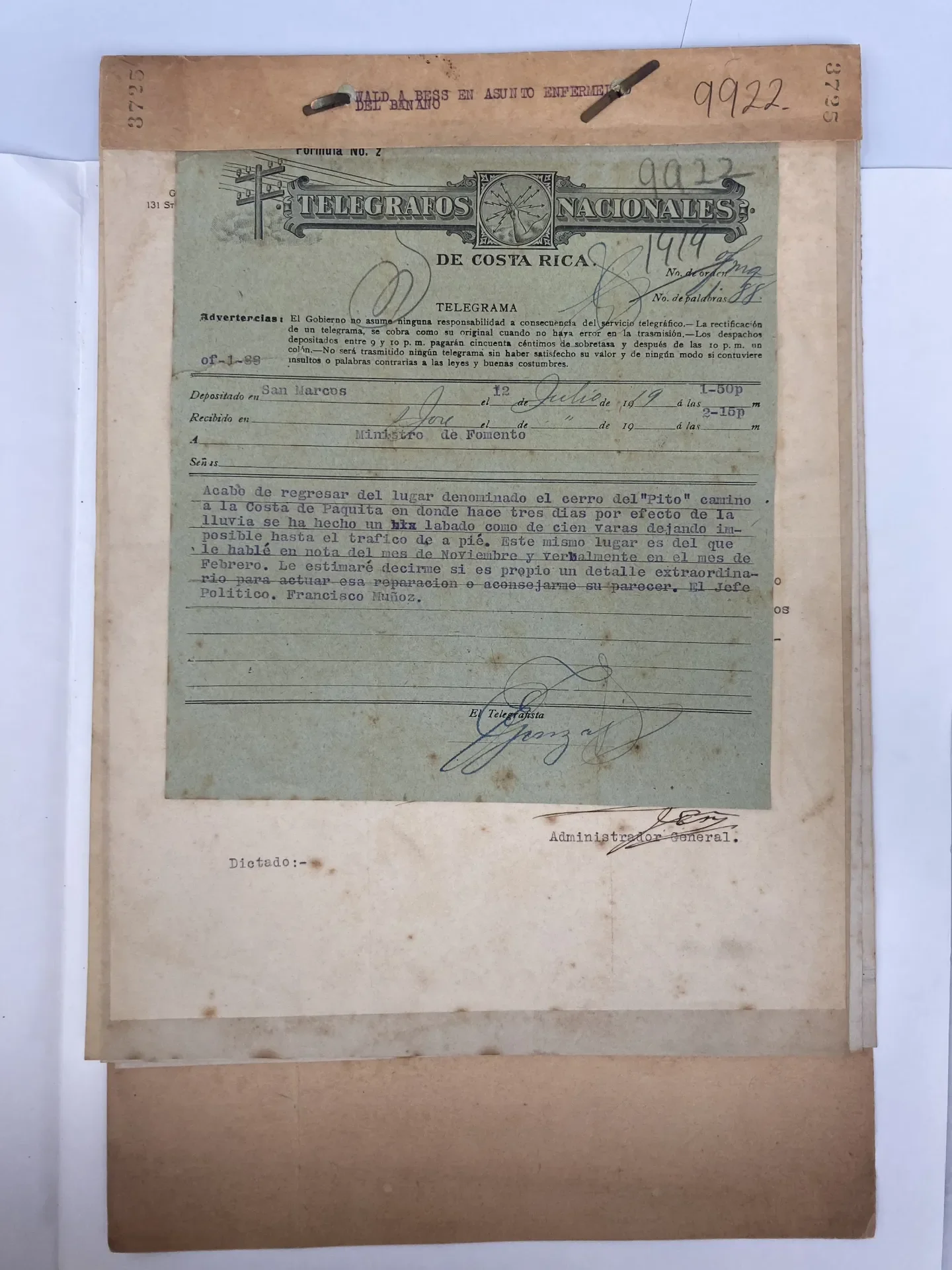
United Fruit’s communications reveal how corporate mandates shaped daily practices within the spatial organisation of banana plantations.
12/7/2024Farm Drawings
Farm drawings are among our most valuable sources of information, allowing us to grasp the spatial rationale of United Fruit.
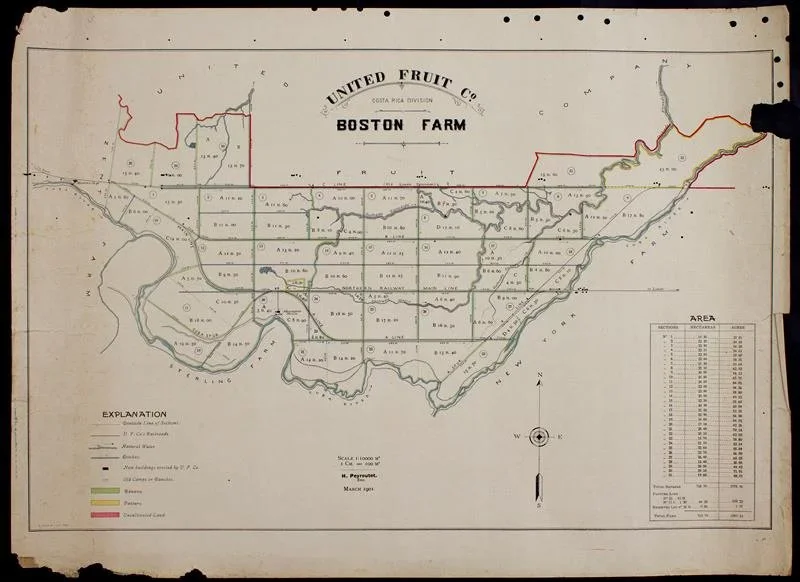
Drawing of Boston Farm, Limón Costa Rica. Available at the Archivo Nacional de Costa Rica.
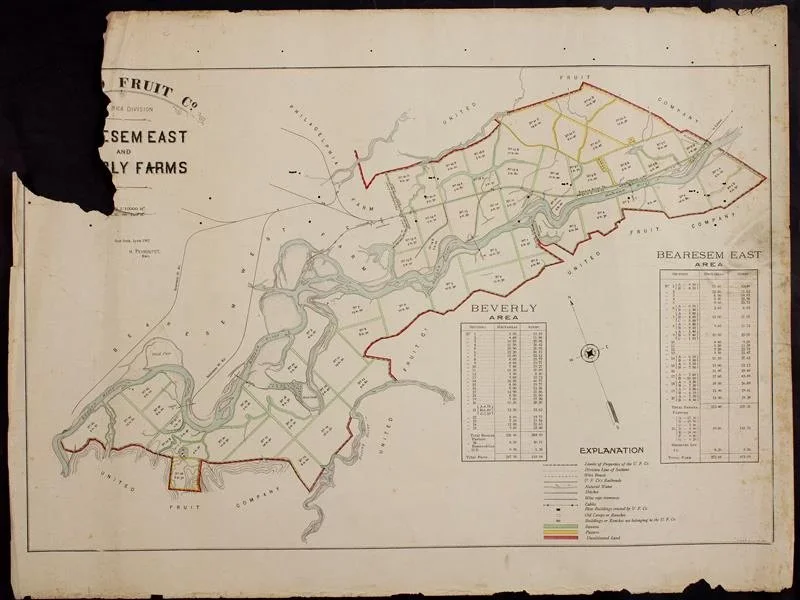
Beverly and Bearesem Farms, Limón, Costa Rica. Available at the Archivo Nacional de Costa Rica.
12/7/2024Aerial Photos
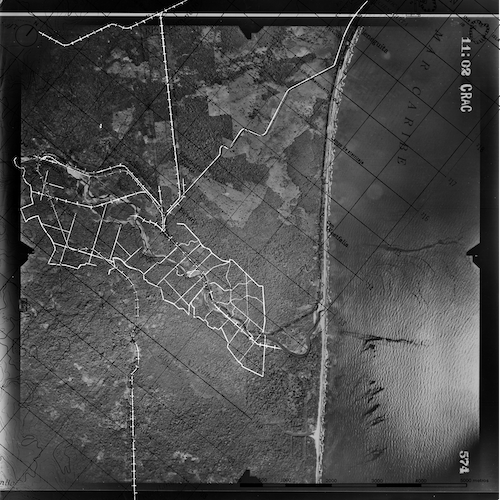
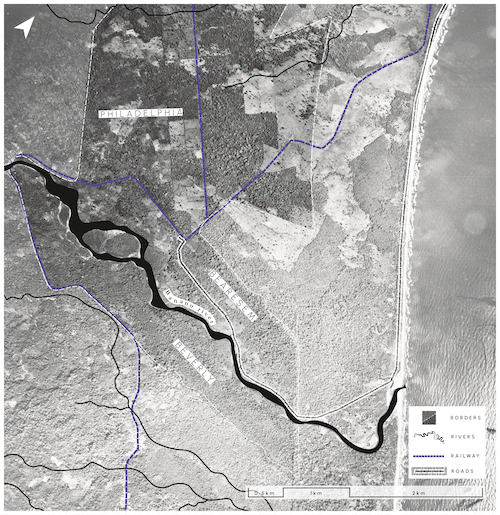
Our work with aerial photos has been instrumental in visualizing the spatial and infrastructural transformations in Costa Rica’s banana-producing regions. By layering these images with historical cartographies and spatial data, we have traced how contamination and corporate practices are inscribed into the land. This approach reveals the ecological and territorial impact of United Fruit’s operations while providing a visual narrative of the interconnectedness between historical agricultural practices and contemporary landscape changes.
Sources:
Instituto Geográfico Nacional de Costa Rica: Situated within the Registro Nacional in Curridabat, San José, this agency is the authoritative body for national cartography, providing essential maps and geospatial data.

12/7/2024Photograph Collections
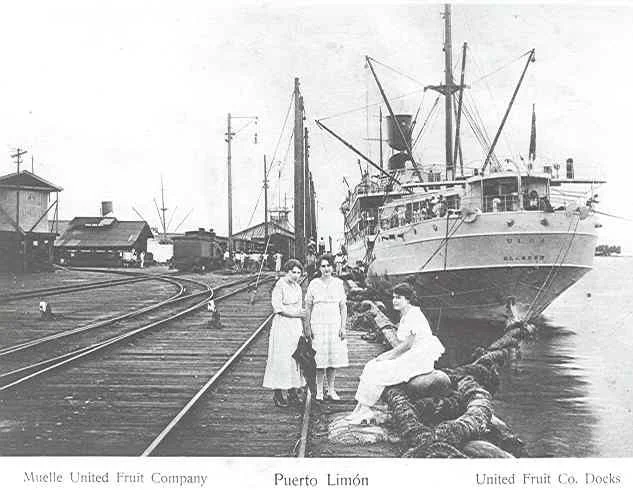
It is challenging to discern contamination in photographs. However, images allow us to trace processes and practices employed in spatial reorganization, revealing the linkages between environmental destruction and dependency on chemical substances. Although our focus is on Costa Rica, we have included pictures from United Fruit’s operations in Guatemala, Honduras, and Colombia to highlight the inherently transnational nature of the company’s perverse extractivist practices. Our main image sources in developing the project have been:
Archivo Nacional de Costa Rica: Located in Curridabat, San José, this institution preserves the nation’s documentary heritage, including historical records, maps, and photographs.
Archivo Nacional de Costa Rica
Biblioteca Nacional de Costa Rica (SINABI): Located in San José, this library offers a vast collection of publications and documents relevant to Costa Rican history and culture.
SINABI
Library of Congress: Located in Washington, D.C., this institution holds extensive international collections, including materials related to Latin American studies.
Library of Congress
United Fruit Company Photograph Collection at Harvard Library-Hollis Images: Situated in Cambridge, Massachusetts, this collection provides visual documentation of the United Fruit Company’s operations.
Harvard Library-Hollis Images
Digital Library at Tulane University: Based in New Orleans, Louisiana, this digital repository includes resources pertinent to Central American studies.
Digital Library at Tulane University